ServicesWater Testing
Water Testing in Bellaire
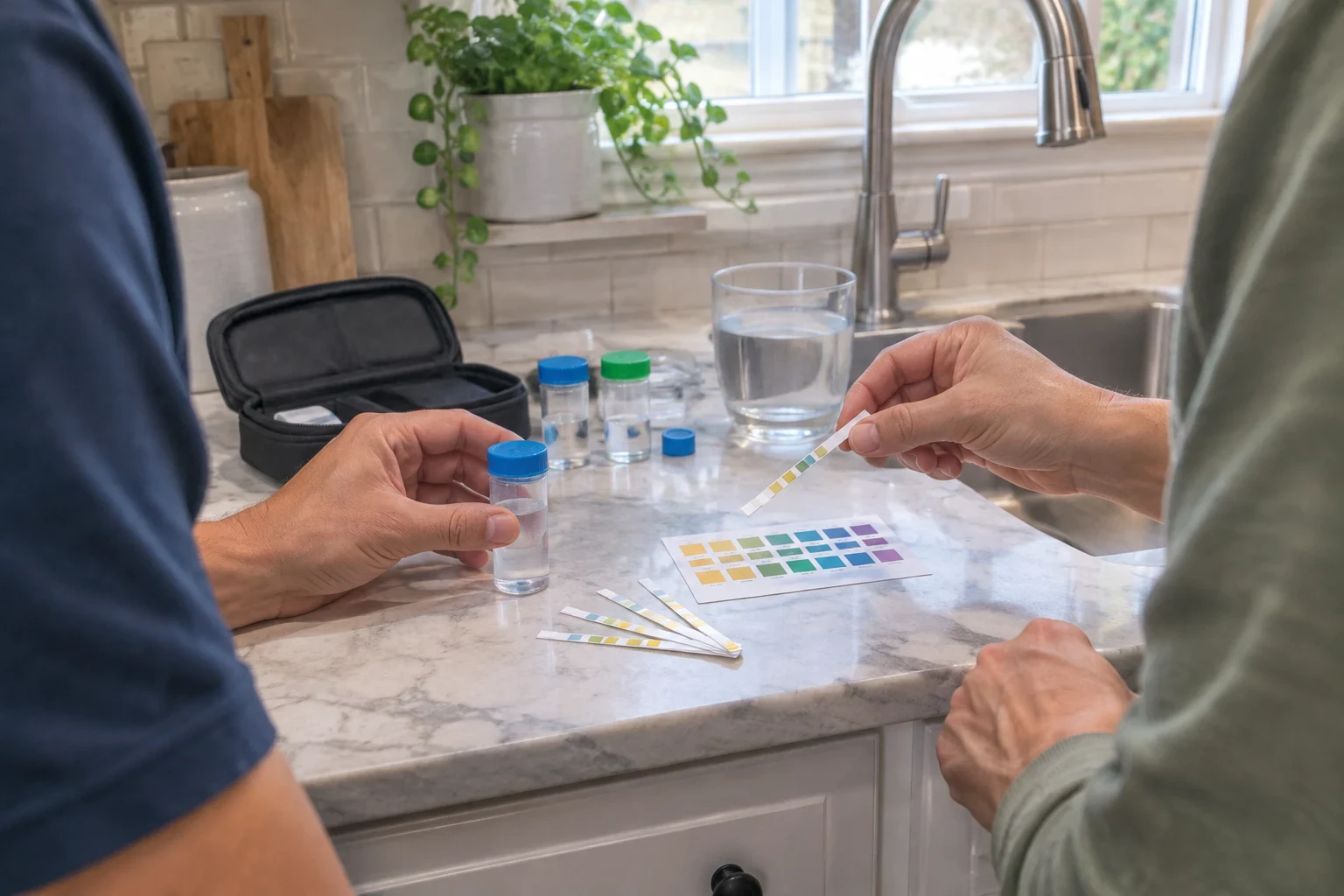
We come to your home, pull samples from the taps you use and show you the numbers. You see what is in your water before anyone talks about equipment. If nothing needs fixing, we say so and leave it there.
Know what is in your water first
Water testing is the first step we take on any job. It tells you what is coming into your home and what is not. We would rather you buy nothing than buy the wrong system.
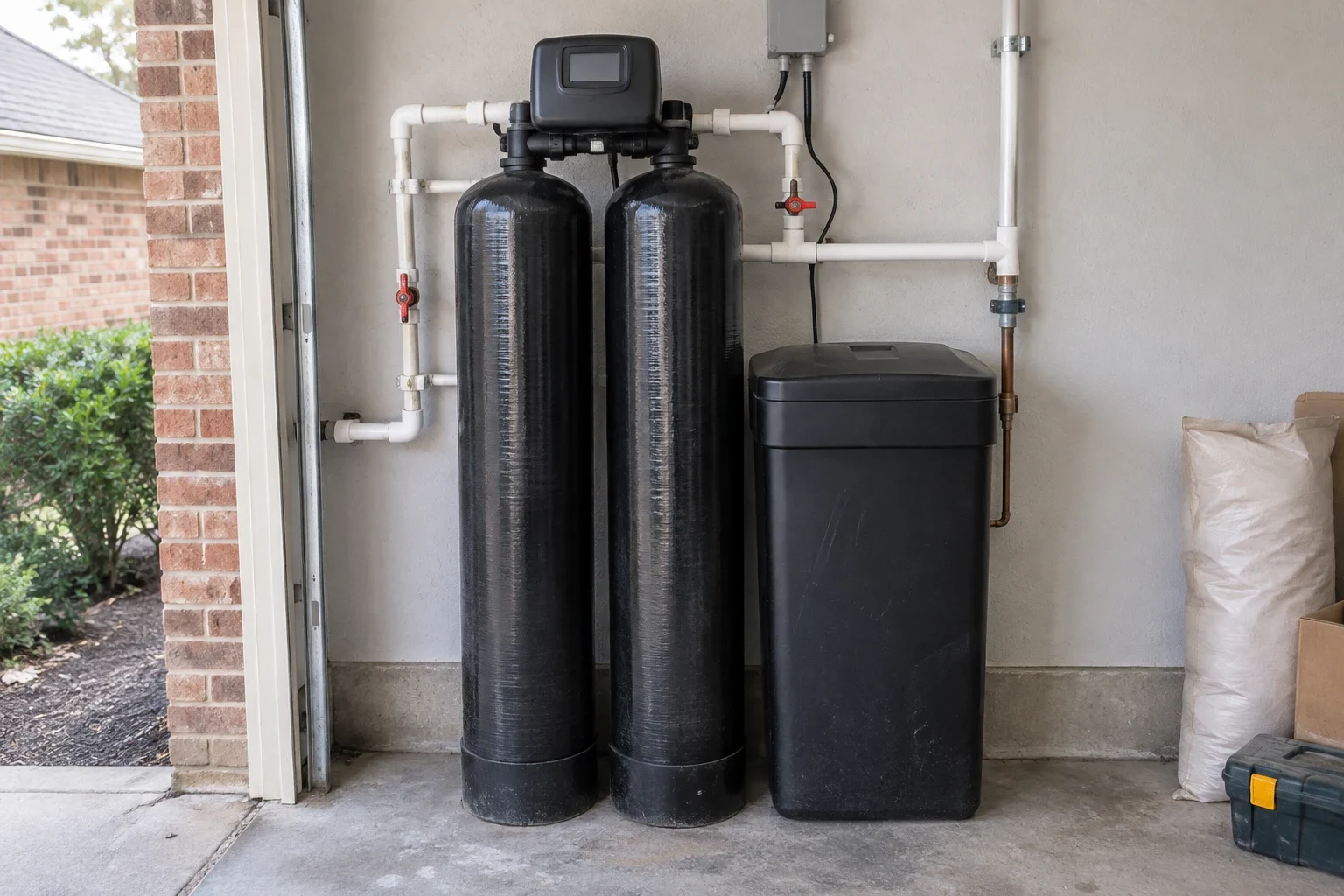
City water has to meet federal drinking water rules. Even so, a test is worth doing when the taste or smell changes, when your home still has older pipes, or when you draw from a private well. The results also point to the right fix: whole-home filtration for chlorine taste, a water softener for scale, or reverse osmosis for drinking and cooking water.
We like to test before the hot months. Long Bellaire summers mean more water use and warmer pipes, and a spring reading gives you a baseline to compare against later in the year.
What a water test covers
Hardness and iron
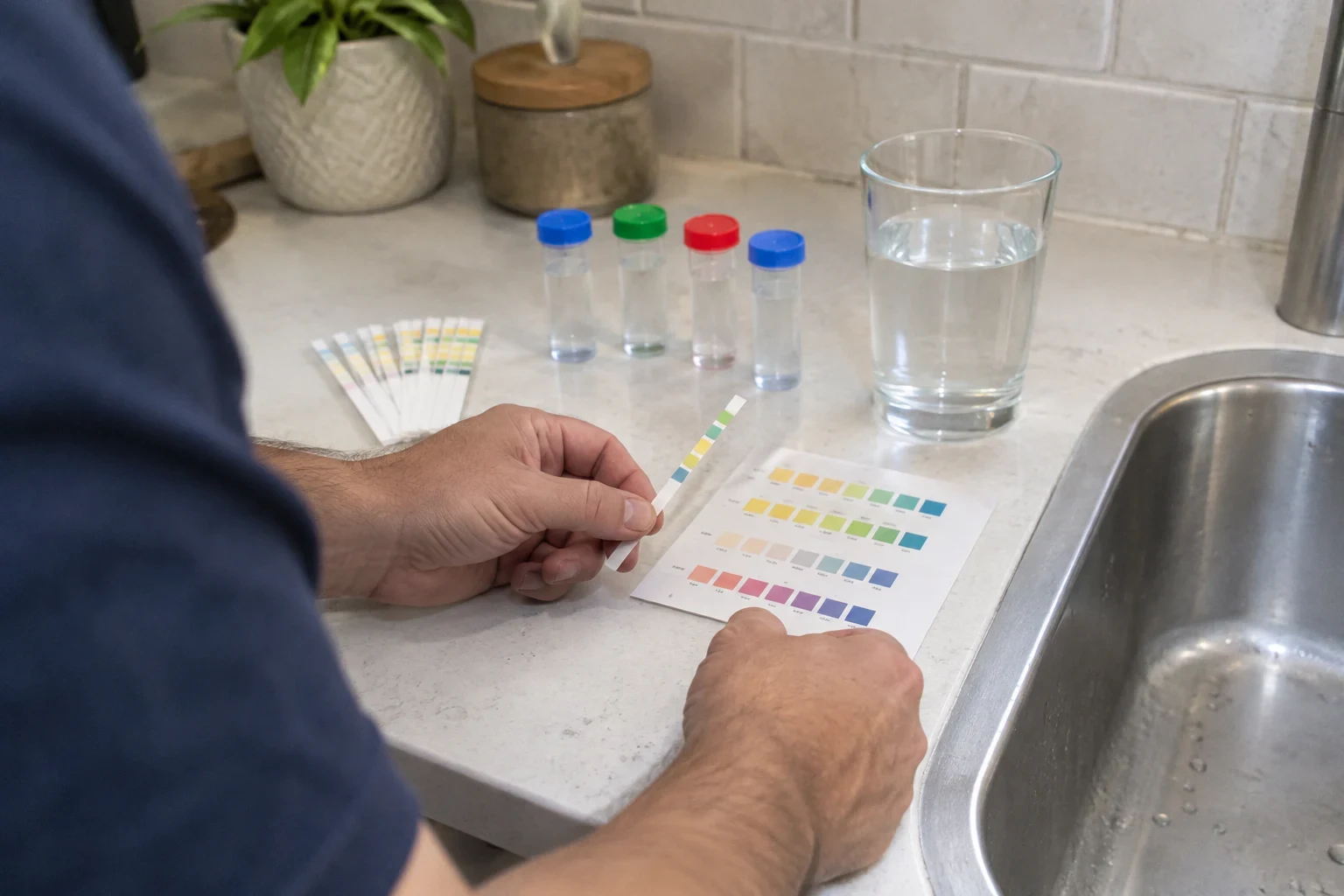
We measure the minerals that leave white crust on faucets and orange stains in tubs. This one number decides whether a softener makes sense for you at all.
Chlorine and taste
We check chlorine levels at the kitchen tap. That is usually the cause when your water smells like a pool.
pH and dissolved solids
pH tells us whether water is likely to wear on pipes and fixtures. Total dissolved solids gives a quick read on everything else in the water.
Lab samples when needed
Some things can't be read on site, like lead or bacteria. When your home or well calls for it, we take a sample for lab testing and explain what it covers.
Your results in writing
You get a sheet with each reading and what it means. Keep it, and compare it next season.
Signs it is time to test your water
- A pool smell at the tap
- A strong chlorine smell or taste is common and usually safe. A test tells you how strong it is and whether a filter would help.
- Spots and crust
- Cloudy glasses, white buildup on showerheads or a crusty kettle point to minerals. Testing shows how much.
- Rust-colored stains
- Orange or brown marks in sinks and toilets can mean iron in the water or old pipes. We find out which.
- Older plumbing
- If your home still has original pipes, it is smart to check for metals in the water you drink.
- A well after heavy rain
- Gulf Coast storms can push surface water toward a private well. Testing after big rain or flooding tells you if anything changed.
- A new home or a new baby
- Moving in or adding to the family is a good reason to get a clean starting point.
How a testing visit works
- 1
A quick call
On the phone we ask about your water source, how old your home is and what you have noticed. That tells us which tests to bring.
- 2
Samples at your home
We draw water from the kitchen tap and any spot you are worried about, before any existing filter. Most visits take under an hour, and we don't need to shut off your water.
- 3
Going over the numbers
We run the on-site tests in front of you and explain each reading in plain words. You can ask as many questions as you like.
- 4
Lab results and a straight answer
If we sent a sample to a lab, we call you when the results are back. Then we tell you what is worth treating, what isn't, and which option fits.
What sets the price of a water test
Price comes down to what we check for. A few readings at the kitchen sink cost less than sending samples off to a lab. You hear what the visit will cost on the phone before we schedule it, so the bill holds no surprises.
- Which tests you need
- Hardness, chlorine and pH are fast readings we take on site. Checking for iron, lead or other metals makes the job bigger.
- Lab work
- Bacteria and some metals can only be measured by a lab. Sending samples out adds cost and a few days before you have answers.
- City water or a well
- A private well gets a longer list of tests than city water. Nobody treats well water before it reaches your tap, so there is more to rule out.
- Follow-up testing
- Testing again after a system is in confirms it is working. If you go with one of our systems, installation is free and you get full services after the sale.
Water testing questions
- Do I need a test if I am on city water?
- Not always. The utility has to meet drinking water rules before water reaches your street. Your pipes, water heater and fixtures can still change it before it fills your glass. If the taste, smell or stains bother you, testing is the sensible first step.
- Will you try to sell me a filter?
- Our job on a test visit is to read your water, not to push equipment. If the readings come back normal, we say so and pack up. If something stands out, we lay out the choices, and the decision stays with you.
- How often should I test?
- Most homes on city water do fine with one test a year. Spring works well, before summer water use climbs. Well owners should test every year and again after flooding or any sudden change in taste.
- Can you test for lead?
- Yes. Lead almost always comes from older plumbing inside the house rather than the city supply. We draw the sample from the tap you drink from and send it off to a lab.
- How long until I get results?
- The on-site readings are finished before we leave. Lab results tend to take several days. Once they are in, we call you and walk through them.
Get a clear read on your water
Tell us what you are noticing and we will plan the right tests for your home. Spring is a good time to get your baseline before summer.