ServicesWater Softeners
Water Softeners in Bellaire
Hard water leaves white crust on fixtures, dulls dishes and builds scale inside your water heater. We test your water first, size a softener to your household, and install it so you get soft water at every tap without guessing at settings.
How a Softener Works and Who Needs One
A softener holds a tank of tiny resin beads. Water passes over them, and the beads trap calcium and magnesium, the two minerals that make water hard. In trade, they release a small bit of sodium or potassium. Take those minerals out and scale stops building up in your pipes, water heater and fixtures.
A softener doesn't fix taste, odor or chlorine. Hardness is all it handles. If chlorine taste is your complaint, whole-home filtration is the better fit. Lots of homes have both, and we can plumb them so each does its own work.
We won't suggest a softener until we've seen your hardness reading. Water differs from home to home and can drift from season to season. Testing first means you get the right size, or you keep your money if your water doesn't need it.
What Comes With a Softener Install
- Hardness test at your tap
- We measure hardness and check for iron before we talk equipment. You see the same number we do.
- Sizing for your household
- Tank size comes from three things: your hardness reading, the number of people under your roof and your typical daily water use. Too small, and the unit recharges over and over and eats salt. Too big, and you've paid for capacity that sits idle.
- Free installation
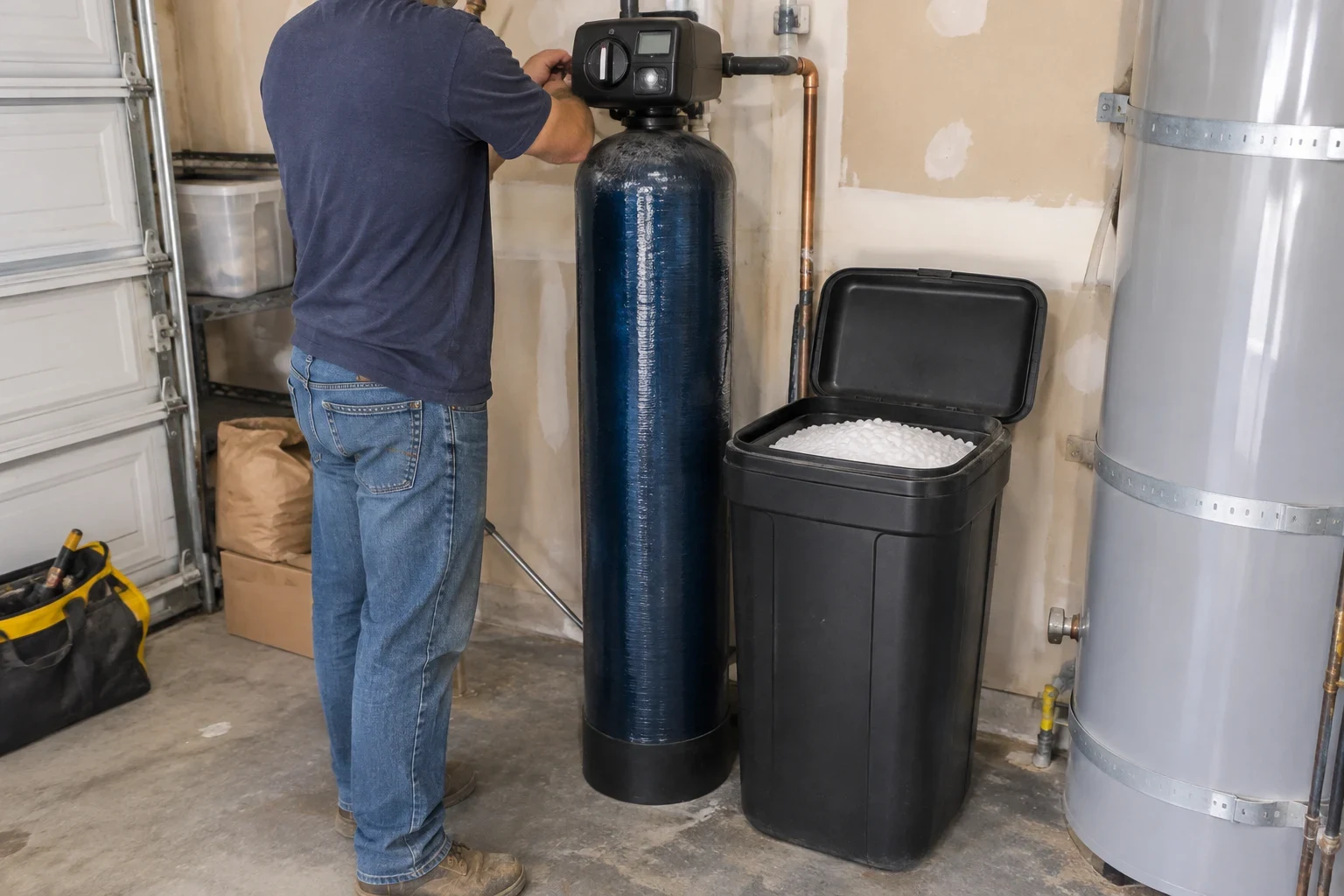
- Installation is free. We set the bypass valve, tie into your main line, run the drain line and set up the brine tank.
- Programming and a walk-through
- We set the control head to your hardness and usage. Then we show you how to add salt, check the level and use the bypass if you ever need it.
- Full services after the sale
- Once it's running, we stay on it. Call us for adjustments, resin questions or anything that doesn't seem right.
Signs Your Water Is Too Hard
White crust on faucets and showerheads
That chalky ring is mineral scale. It comes back days after you clean it.
Spotty glasses and dull dishes
Hard water leaves film on glassware even after a full dishwasher cycle.
Soap that won't lather
You use more shampoo, soap and detergent than you should, and skin feels tight after a shower.
Rumbling or popping from the water heater
Minerals drop out of the water and pile up on the floor of the tank. When the burner kicks on, water caught under that layer boils and makes noise. Long summer showers and big laundry days add to the pile.
Low flow at a few fixtures
Scale narrows aerators and showerhead holes. Flow drops a little at a time, so it's easy to miss.
How the Job Goes
- 1
Test and talk
We test a sample from your tap and go over the numbers with you right there. If hardness comes back low, we'll tell you a softener isn't worth it.
- 2
Pick a spot
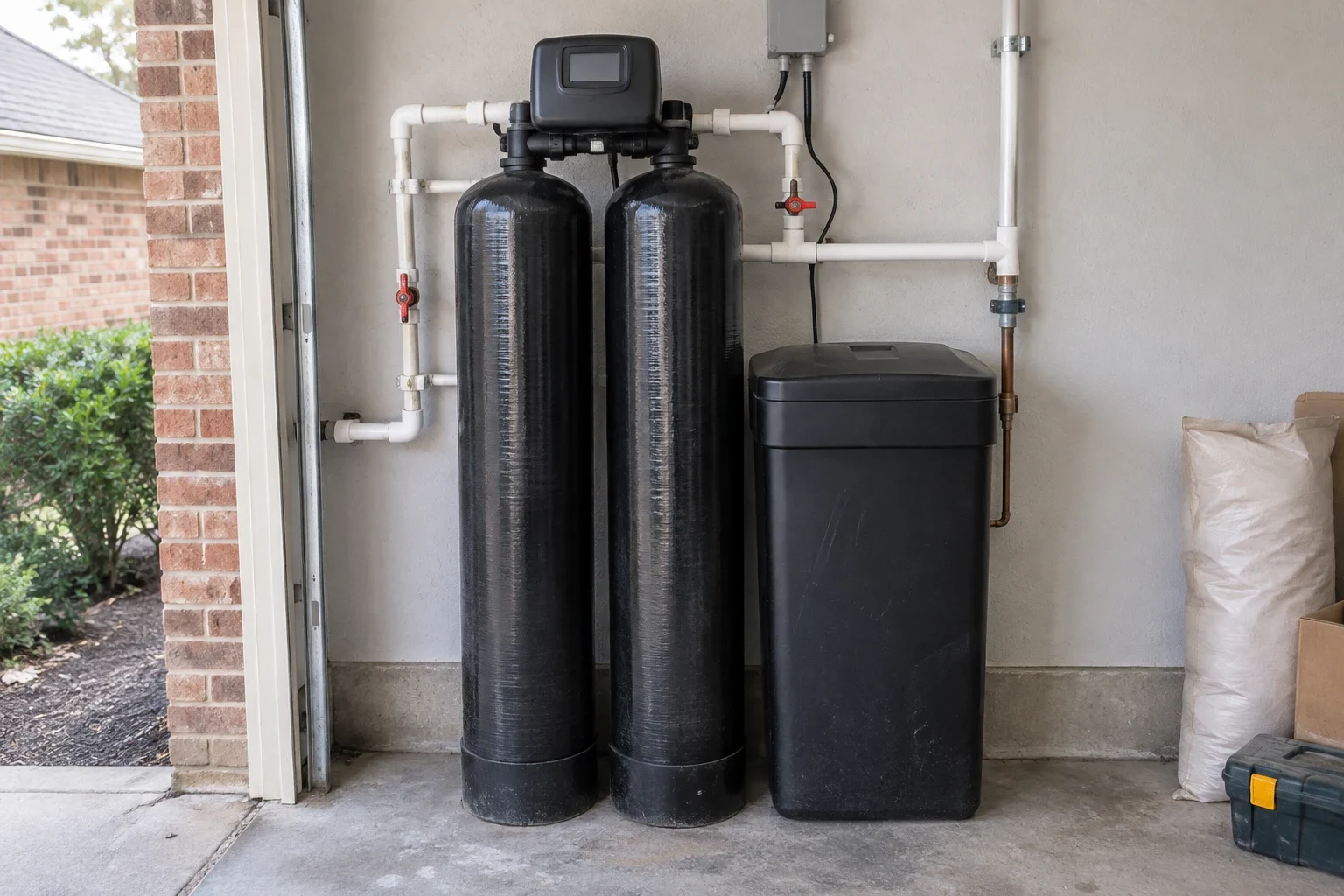
Softeners usually sit in the garage near where the main line comes into your home. We need a drain and a standard outlet nearby.
- 3
Putting it in
Water to the house goes off first. Then we cut in the bypass valve and plumb the softener into the line. You'll be without water for a short stretch while we work, and we clean up before we pack the truck.
- 4
First regeneration
We run a regeneration cycle, retest at a tap and confirm the water reads soft. Then we show you the salt tank and the settings.
What Moves the Price
Installation is free, so your cost comes down to the equipment and what your plumbing needs. We give you the price by phone or at the visit, before any work starts. No line items show up later that we didn't talk about.
- Tank size
- Harder water and bigger households need more resin. More resin means a larger tank.
- Control valve type
- Metered valves regenerate based on actual water use and save salt. Timer valves cost less up front.
- Iron in the water
- If the test shows iron, you may need a resin made for it or a separate filter ahead of the softener.
- Plumbing at the install spot
- Copper, PEX and older galvanized pipe each take different fittings. A missing drain or outlet nearby adds work.
Water Softener Questions
Something not covered here? (713) 352-8398
Do I really need a softener?
Not every home does. Hardness varies, and if yours reads low, a softener won't change much. We test first and give you a straight answer. If the number lands on the borderline, we'll tell you that too.
Will soft water taste salty?
Most people can't taste the small amount of sodium a softener adds. If you'd rather limit it, potassium chloride works in place of salt. A reverse osmosis system at the kitchen sink also strips most of it out of your drinking water.
How much salt will I go through?
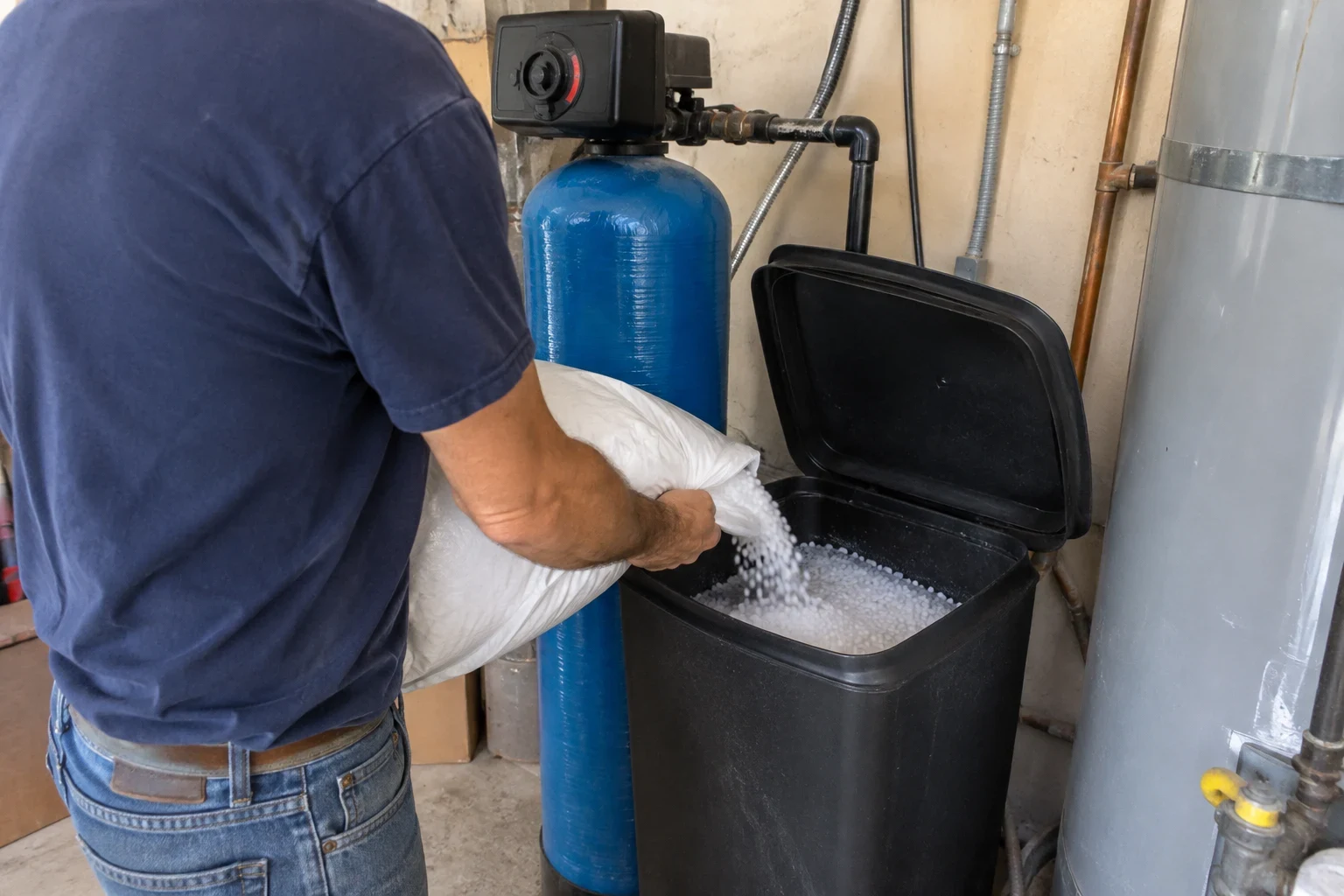
That comes down to your hardness reading and your household's daily water use. Plenty of families refill the brine tank every month or two. Summer brings more showers and more laundry, so give the tank a look a bit more often when the weather turns hot.
Will a softener get rid of chlorine or other contaminants?
No. Its one job is pulling out the minerals that cause hardness. If chlorine taste and smell bother you, whole-home filtration handles that, and reverse osmosis is the right tool for what you drink and cook with. A water test shows which of these your home actually needs.
Can a softener work on well water?
Yes, but well water often carries iron or other minerals that should be treated first. We test the well and may pair the softener with well water treatment so the resin holds up longer.
Find Out If Your Water Needs Softening
Give us a call and we'll set up a time to test your water. If a softener makes sense, installation is free and we stay with you after the sale.